
Roller bearings rarely fail on a convenient schedule, and they seldom arrive as quickly as a production line demands. For maintenance planners, MRO buyers, and plant engineers, the real exposure is not the bearing itself but the gap between when it is needed and when it can be delivered. Order too late and you invite unplanned downtime; order too early and you tie up capital and shelf space. The discipline that closes that gap is lead time planning, which treats delivery windows, reorder points, and supplier reliability as one system rather than three separate tasks. This guide explains what shapes roller bearing lead times and how to build an ordering schedule that keeps critical equipment running without overstocking the storeroom.
Lead Time Is the Variable That Breaks Otherwise Sound Maintenance Plans
Most bearing failures announce themselves over weeks rather than minutes: rising vibration, elevated operating temperature, a change in grease condition, a subtle shift in noise. Planning time usually exists. What goes wrong is the assumption that a replacement can be sourced inside that window. A gearbox rebuild scheduled for the first week of the month can stall for a fortnight because a spherical roller bearing in an uncommon bore size was quoted at twenty working days instead of the five the planner remembered from last year.
Lead time behaves like a moving target. It stretches when steel allocations tighten, when a factory fills its schedule with large OEM contracts, and when freight routes or customs procedures change. Hard-coding it as a fixed number in an ERP system is the most common and most expensive planning error. Treating it as a measured, monitored variable is what separates plants that absorb surprises from those that absorb downtime.
What Actually Drives Roller Bearing Lead Times
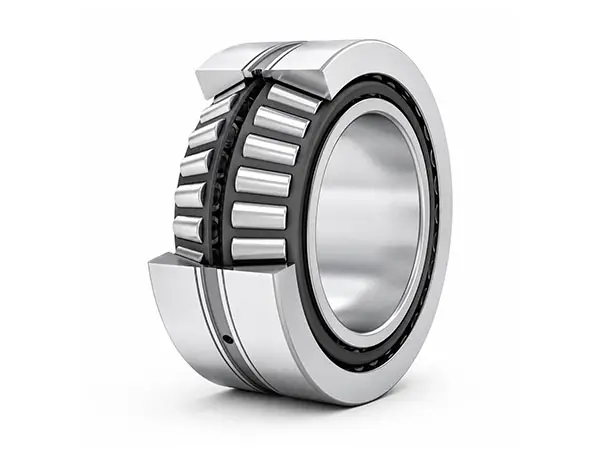
Delivery dates for cylindrical, spherical, and tapered roller bearings are not random. They are the sum of several distinct stages, and each stage can be compressed or extended independently of the others.
- Design type. Catalogue-standard bearings in common bore sizes are frequently held in stock or produced in short, repeatable runs. Special bores, non-standard widths, high-precision grades, and application-specific cages move into a different production queue with its own scheduling rhythm.
- Material availability. Bearing-quality steel is sourced in heats, not in single pieces. When steelmakers allocate rolling capacity elsewhere, even a well-run bearing plant faces longer inbound waits that it cannot schedule away.
- Order quantity. A single replacement unit and a five-hundred-piece production order travel different paths. Small quantities may be picked from existing inventory; large quantities enter planning, heat treatment, grinding, and finishing cycles.
- Customization and documentation. Special coatings, modified internal clearance, matched pairs, and certification or traceability requirements each add engineering review and inspection steps.
- Logistics and clearance. Cross-border freight, port congestion, and import documentation can add days that have nothing to do with manufacturing at all.
The practical implication is simple: a quoted lead time applies to a specific configuration, not to a brand or a product family. Two bearings that look identical on a general arrangement drawing can carry lead times that differ by a factor of four.
Why Quoted Dates Drift
Suppliers quote against current capacity, and capacity is consumed by whoever commits first. A distributor that quoted twelve days in January may be quoting eighteen in June without any change in its own performance, simply because its upstream factory is fully booked. This is why purchase history is more reliable than a price list when you are calculating how much buffer you need.
Setting Reorder Points and Safety Stock With Real Numbers
The underlying calculation is not complicated, and it does not need specialist software to be useful:
Reorder point = (average daily consumption × lead time in days) + safety stock
What matters is the honesty of the inputs. Three practices keep the formula grounded:
- Measure consumption, do not estimate it. Pull twelve months of issue history for each critical bearing position. Seasonal patterns and shutdown-related spikes will show up immediately, and they are frequently missed by rule-of-thumb planning.
- Use experienced lead time, not quoted lead time. Record the actual date each order arrived against the date it was placed. After four or five cycles, you have a realistic distribution rather than a single optimistic figure.
- Size safety stock against variability. A bearing with a stable fourteen-day lead time needs less buffer than one with a lead time that has ranged from nine to thirty days, even if both average the same.
Review the numbers quarterly. Consumption changes when production volumes change, and lead times change when supply conditions shift. A reorder point that was correct eighteen months ago is often quietly wrong today.
Ordering Strategies That Reduce Lead Time Exposure
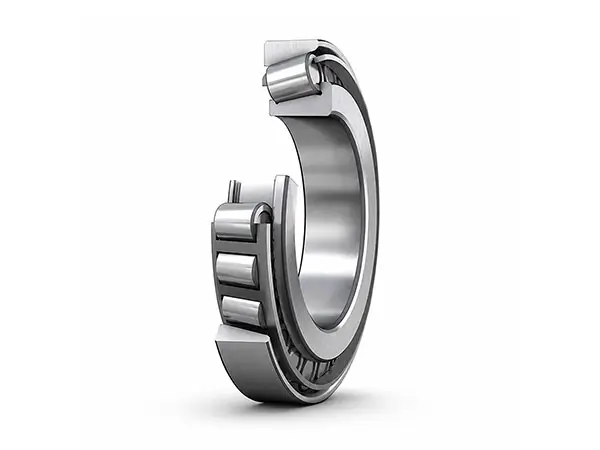
Buffer stock is only one tool. Several commercial arrangements shift lead time risk away from the plant and onto the supply chain, where it can be managed more efficiently.
- Blanket orders with scheduled releases. Commit to an annual volume and draw it down in agreed increments. The supplier can plan production, and you avoid committing warehouse space to the full quantity at once.
- Consignment or vendor-managed inventory. Stock sits on your shelf but remains the supplier's property until it is consumed. This works well for high-turnover sizes used across multiple assets.
- Standardization across equipment. Reducing the number of distinct bearing part numbers in a plant lowers the total inventory needed to achieve the same service level, and it improves the accuracy of consumption forecasts.
- Dual sourcing for critical positions. For bearings whose failure stops production, qualifying a second supplier is insurance against a single factory's scheduling problems.
- Planned replacement instead of reactive replacement. Where condition monitoring indicates a bearing will reach the end of its useful life within a known window, ordering against that date removes the urgency premium entirely.
Selecting a Supplier That Supports Long-Range Planning
A supplier's value in this context is not measured by the lowest unit price. It is measured by whether the information they provide is good enough to plan with. Look for confirmed availability in writing rather than verbal reassurance, clear differentiation between stock items and made-to-order items, and honest communication when a date slips.
CHG Bearing works with maintenance and procurement teams on exactly this basis: confirming realistic lead times for cylindrical, spherical, and tapered roller bearing requirements, supporting volume planning through scheduled releases, and flagging supply conditions early enough that a reorder point can be adjusted before it becomes a downtime event. For plants running critical rotating equipment, that kind of transparency is worth more than a marginal discount.
Frequently Asked Questions
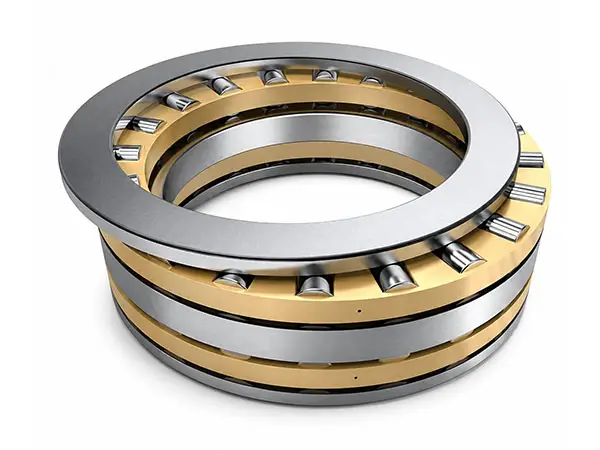
How far in advance should roller bearings be ordered?
For stocked, standard sizes, ordering at the calculated reorder point is usually sufficient. For made-to-order or non-standard configurations, work backwards from the required installation date and add the full experienced lead time plus safety margin. If the resulting order date has already passed, escalate immediately rather than assuming the schedule will hold.
Is it cheaper to order bearings in bulk?
Unit pricing often improves with volume, but carrying costs, obsolescence risk, and storage conditions matter as well. Bulk buying makes sense for sizes with predictable consumption across multiple assets. For slow-moving or application-specific bearings, it usually converts a price saving into dead stock.
Can lead times be shortened for critical bearings?
Sometimes. Expedited manufacturing, air freight, or drawing from a distributor's existing stock can compress delivery, but each option carries a cost and should be reserved for positions where downtime genuinely justifies it. The more sustainable answer is to plan well enough that expediting is rarely required.
Roller bearing orders are not difficult to plan; they are difficult to plan well when lead time is treated as a constant. Measure what you actually experience, set reorder points against real consumption, use commercial arrangements to move risk upstream, and work with suppliers who tell you the truth about availability. Done consistently, this turns bearing procurement from a recurring emergency into a routine part of maintenance planning.