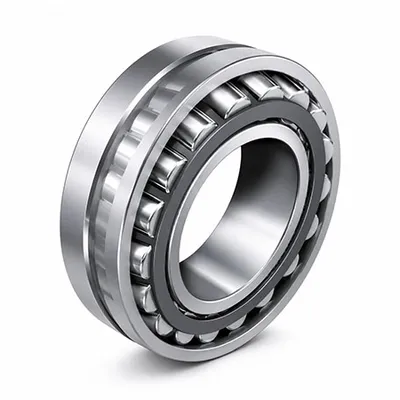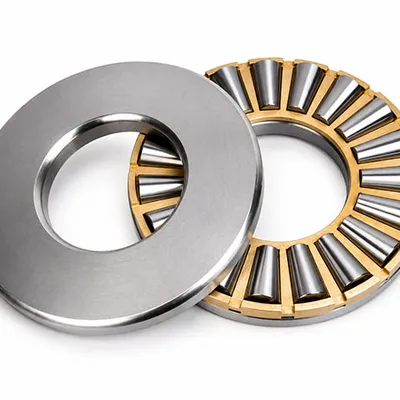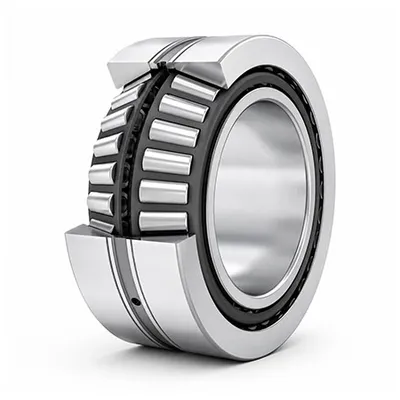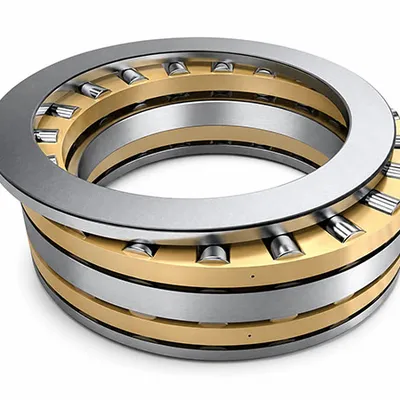
Selecting a roller bearing looks straightforward until the dimensions you need do not exist in the system you assumed. A shaft measuring 2.4375 inches, a housing bored to 110 mm, or a legacy drawing dated 1974 can each point to a bearing that is stocked in one measurement system and simply unavailable in the other. Metric and inch roller bearings are not interchangeable through conversion alone: they follow different standards, different tolerance philosophies, and different supply chains. Getting the distinction right at the specification stage prevents redesign, rework, and unplanned downtime. This guide explains how the two systems differ, where they appear to overlap, and how to specify and source the correct bearing for your application.
The Fundamental Difference Between Metric and Inch Roller Bearings
Metric roller bearings are dimensioned according to ISO boundary dimension standards, with bore, outside diameter, and width expressed in millimeters. Inch roller bearings follow ABMA and ANSI conventions, with boundary dimensions expressed in inches, including fractional bores such as 1 7/16", 2 3/16", and 3 15/16". The two families exist because North American industry standardized on inch dimensions long before metrication spread through global manufacturing, and much of that installed base is still running today.
The critical point for anyone specifying a bearing is this: converting millimeters to inches does not produce an inch bearing. A 25 mm bore is 0.9843 inches, not 1.000 inch. A 50 mm bore is 1.9685 inches, not 2.000 inches. Even where two bearings land within a few thousandths of an inch of each other in envelope dimensions, the internal geometry, cage design, corner radii, and tolerance zones are defined separately, so they are not drop-in replacements.
Why the Numbers Never Line Up Exactly
Metric bore sizes progress in clean increments: 20, 25, 30, 35, 40 mm, and so on. Inch bore sizes generally progress in fractional increments, frequently sixteenths of an inch. Because one inch equals 25.4 mm, the two sequences only coincide at rare points. This is why a bearing that looks like a near match on a drawing often will not seat correctly on the shaft or in the housing.
Standards Bodies and Designation Systems
Metric bearings are governed by ISO standards, with designation systems built around series numbers that describe the internal design and width series. Inch bearings are governed by ABMA and ANSI standards, and their designations often read very differently, sometimes using prefix letters or numeric series that have no metric equivalent. When you cross-reference between the two systems, you are not translating a part number; you are identifying a functionally similar bearing and then verifying that it fits, carries the load, and survives the operating conditions.
Tolerances, Fits, and Load Ratings
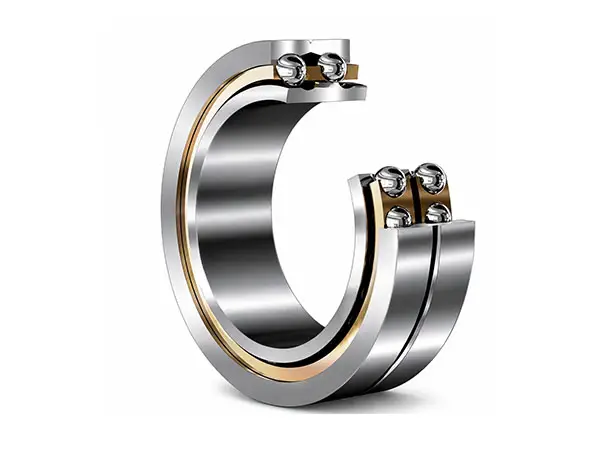
Dimension is only one layer of the difference. Tolerance is the one that causes the most expensive mistakes.
Metric bearings use tolerance classes such as P0, P6, P5, and P4, with bore and outside diameter tolerances typically expressed as symmetric plus and minus values in micrometers. Inch bearings historically use tolerance classes defined by ABMA, where bore tolerances may be expressed in ten-thousandths of an inch and follow different conventions, including unidirectional tolerance zones in certain classes. A shaft that fits a metric bearing perfectly may be marginally too tight or too loose for an inch bearing of nominally similar size.
Internal clearance follows the same pattern. Metric clearances are specified in micrometers; inch clearances are traditionally specified in ten-thousandths of an inch. The specified ranges for comparable applications are not always mathematically equivalent once converted, so clearance should be treated as a separate specification decision rather than a unit conversion.
Load ratings deserve equal caution. Two roller bearings with nearly identical envelope dimensions can carry noticeably different dynamic and static ratings because of differences in roller count, roller profile, cage material, and raceway geometry. Always compare published ratings rather than assuming equivalence from the size alone.
Metric vs Inch Roller Bearings: Direct Comparison
- Units: Metric bearings use millimeters throughout; inch bearings use inches, often as fractions.
- Bore progression: Metric follows round millimeter increments; inch follows fractional increments, commonly sixteenths.
- Governing standards: ISO for metric; ABMA and ANSI for inch.
- Tolerance classes: Metric uses P0 through P4 and beyond; inch uses ABMA classes with different tolerance zones.
- Internal clearance: Expressed in micrometers for metric, ten-thousandths of an inch for inch.
- Availability: Common metric sizes are widely stocked worldwide; inch sizes have a narrower supplier base.
- Lead time and price: Metric sizes generally benefit from higher production volume; inch sizes often cost more and take longer.
- Interchangeability: Neither system is a direct substitute for the other without full verification.
When Each System Is the Right Choice
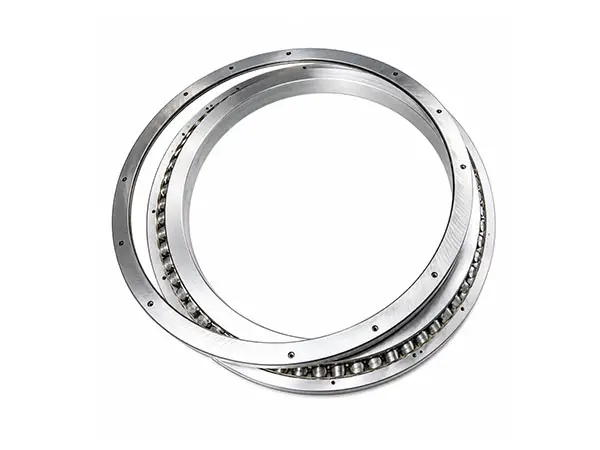
Choosing Inch Roller Bearings
Inch bearings remain the correct choice for equipment originally designed to inch dimensions. That includes many North American steel mill stands, paper machine sections, mining and aggregate equipment, older gearboxes, and any assembly where the shaft and housing already exist and cannot be modified economically. In repair and replacement work, matching the original system is almost always faster and cheaper than attempting a conversion.
Choosing Metric Roller Bearings
Metric bearings are the default for new designs, equipment built to ISO conventions, and machinery sourced from European or Asian OEMs. They also offer practical advantages in the replacement market: a broader global production base, more readily available stock, and a wider selection of modern cage and sealing configurations. For a new build with no legacy constraint, metric is usually the lower-risk specification.
Sourcing and Cross-Referencing Without Costly Errors
Cross-referencing is where most problems surface. A cross-reference that matches dimensions but ignores tolerance class, clearance, or load rating can pass a receiving inspection and still fail in service. Four checks prevent that outcome:
- Measure the shaft and housing directly rather than converting from a drawing. Confirm actual diameters, not nominal ones.
- Confirm the fit intent. Verify whether the original application called for an interference fit on the shaft, a loose fit in the housing, or something else.
- Compare ratings. Check dynamic capacity, static capacity, and limiting speed against the operating conditions.
- Verify clearance and lubrication path. Confirm that the replacement accepts the same lubrication method and clearance range.
Working with a supplier that stocks both systems shortens this process considerably. CHG Bearing supplies metric and inch roller bearings and can help verify that a proposed cross-reference matches the original specification in dimensions, tolerance, and load capacity, rather than matching on size alone.
Frequently Asked Questions
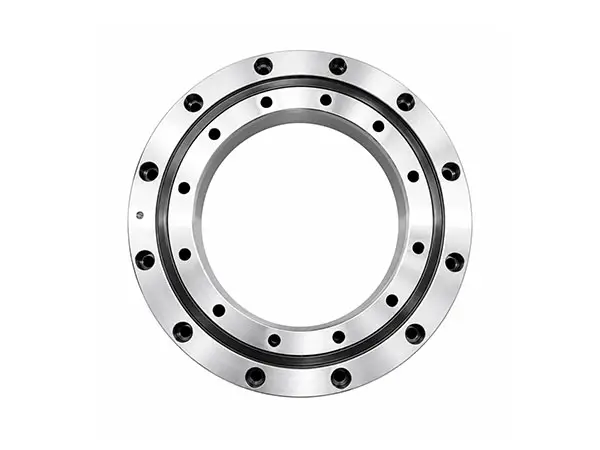
Can I replace a metric roller bearing with an inch roller bearing if the dimensions are close?
No. Close is not interchangeable. Tolerance zones, internal clearance, corner radii, and load ratings differ between the two systems, so a near match can still cause premature failure or installation damage.
Is an inch bearing the same as an imperial bearing?
Yes. Inch and imperial are used interchangeably to describe bearings dimensioned in inches under ABMA and ANSI standards.
Does a 25 mm bore equal a 1 inch bore?
No. One inch equals 25.4 mm, so a 1 inch bore is larger than a 25 mm bore by 0.4 mm, which is significant in a bearing fit.
Are inch roller bearings still being manufactured?
Yes, but the supplier base is smaller than for metric bearings. Availability varies by size and type, so lead times should be confirmed before committing to a production schedule.
Final Thoughts
Metric and inch roller bearings solve the same engineering problem through two separate standards. The dimensions, tolerance classes, clearance conventions, and supply chains are distinct, and no conversion factor bridges them. For replacement work, match the original system and verify the full specification. For new designs, metric usually offers broader availability and more design options. In both cases, confirm dimensions, tolerances, clearance, and load ratings before the bearing reaches the shaft, because that is where the cost of a wrong assumption becomes visible.