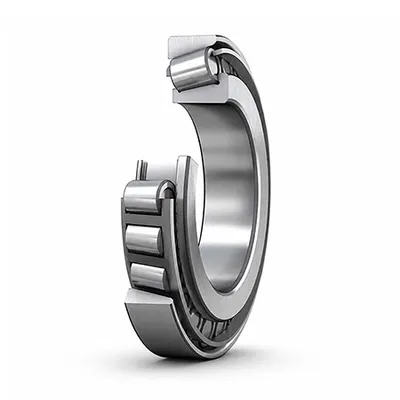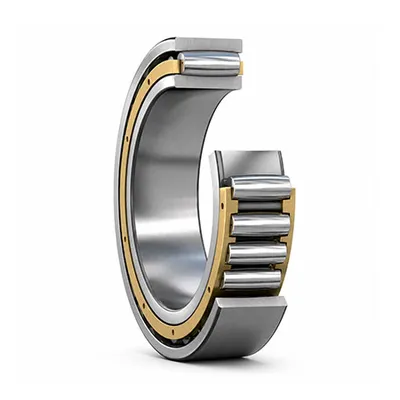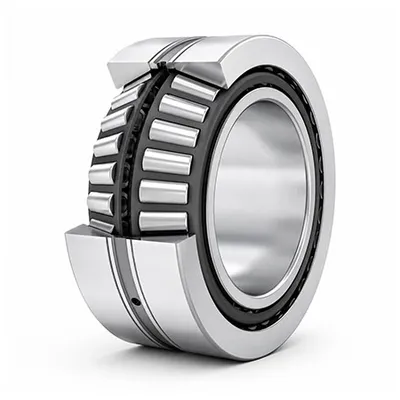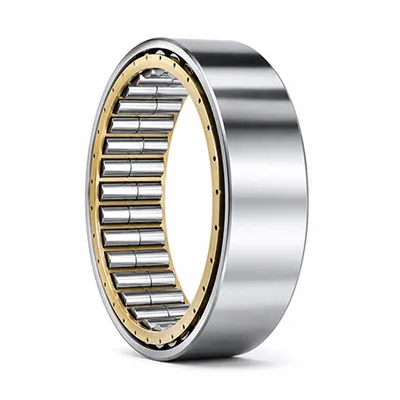
Roller bearings carry heavier loads than ball bearings of the same envelope, but that advantage comes with a speed penalty. As rotational speed rises, rollers gain centrifugal force, internal load paths shift, and the heat generated inside the bearing begins to outrun the heat it can shed. At some point the bearing stops behaving like a load-carrying component and starts behaving like a thermal and dynamic problem. Knowing where that point sits, and which design variables move it, is what separates a reliable high-speed arrangement from one that fails early. This article explains the physical limits behind roller bearing speed ratings and the design decisions that raise them.
What a Speed Rating Really Tells You
Bearing catalogs publish two different numbers, and confusing them is one of the most common specification errors. The limiting speed is a catalog-level ceiling for a given bearing under defined reference conditions, typically light load, correct lubrication, and adequate heat dissipation. The thermal reference speed, defined in ISO 15312, is derived from a heat balance: the speed at which heat generation inside the bearing equals heat dissipation through a defined housing and shaft, for a stated reference temperature rise.
Neither figure is a guarantee. Both assume favorable conditions that a real application rarely reproduces exactly. A roller bearing rated at one speed in a catalog may run far below that rating inside a poorly cooled, heavily preloaded housing, or comfortably above it when oil-jet lubrication and a rigid, thermally stable shaft are in place.
The Physical Limits Behind the Numbers
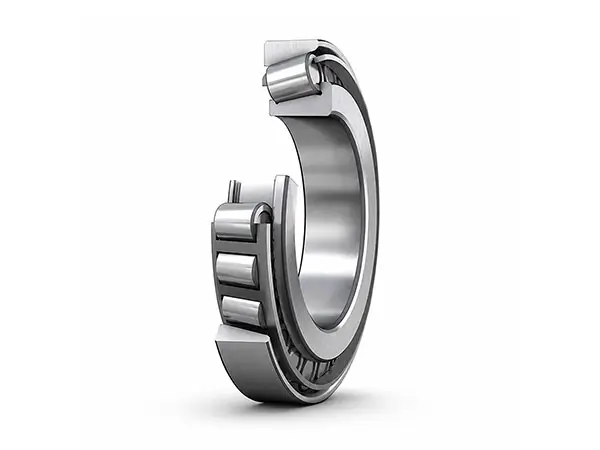
Heat generation versus heat dissipation
Every high-speed bearing is a heat engine in a losing battle with itself. Friction torque comes from rolling resistance, sliding in the contacts, lubricant churning, and cage interaction. That heat must travel out through the rollers, rings, shaft, and housing. As speed climbs, heat generation rises faster than most conduction paths can carry heat away, and the lubricant film that keeps metal off metal thins as temperature increases.
The practical result is a runaway threshold. Beyond a certain speed, each increment of friction produces more heat, which reduces film thickness, which increases friction. Once that loop begins, bearing life collapses quickly. This is why temperature, not rotational speed, is usually the true limiting variable.
Centrifugal and gyroscopic effects on the rollers
A cylindrical or tapered roller orbiting a shaft at high speed experiences centrifugal force proportional to the square of rotational speed. At moderate speeds this force is negligible. At high speeds it presses the roller against the outer raceway, alters the load distribution around the bearing, and can cause the roller to skew within its pocket. For spherical and tapered rollers, the effect is more pronounced because of greater mass and more complex geometry.
The consequence is a bearing that carries its rated load at low speed but loses effective capacity as speed rises. Nothing about the steel has changed; the internal load path has.
Cage dynamics and lubricant behavior
At high speed the cage becomes a structural component rather than a simple separator. It must guide rollers without excessive pocket clearance, resist its own centrifugal growth, and survive sliding contact with the rolling elements. Lubricant behavior matters just as much. Grease has a limited ability to reach the contact and to carry heat away, while oil can be delivered precisely but requires a return path and, often, active cooling.
Design Choices That Raise the Ceiling
Speed capability is not fixed by bearing type alone. It is engineered. The following changes are the ones that consistently move the limit upward.
- Machined cages in brass, bronze, or PEEK hold rollers more precisely and tolerate higher sliding speeds than pressed steel cages, at the cost of weight and price.
- Optimized roller profiles, including logarithmic and specially crowned designs, reduce stress concentration at the roller ends and lower friction under misalignment.
- Controlled internal clearance and preload keep the loaded zone stable and prevent roller skidding, a leading cause of high-speed failure.
- Tighter precision grades and finer surface finish reduce vibration, noise, and the micro-slip that drives heat generation.
- Targeted lubrication methods such as oil jet, under-race, and air-oil systems deliver measured lubricant to the contact while removing heat; grease-for-life arrangements cannot serve the same duty.
- Deliberate thermal path design with dimensionally stable, heat-treated rings and a housing that conducts heat away often extends usable speed range more than any catalog upgrade.
CHG Bearing treats high-speed roller bearing applications as a system problem, matching cage material, internal geometry, clearance class, and lubrication strategy to the actual duty cycle rather than to a single speed figure.
How to Compare Bearings for a High-Speed Application
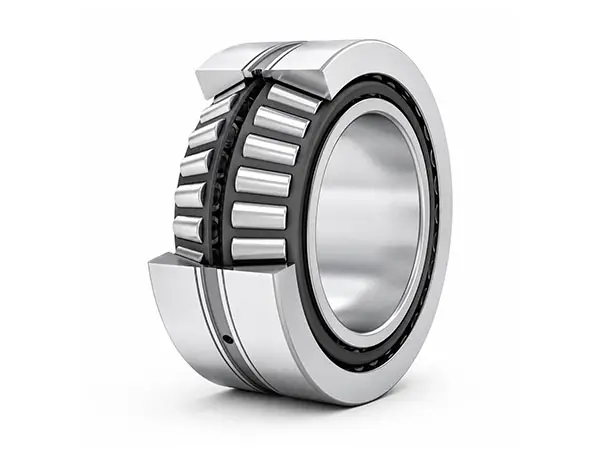
When two suppliers quote the same bearing type, compare the parameters that govern high-speed behavior:
- Published limiting speed and thermal reference speed, along with the conditions under which each was determined.
- Allowable n·dm value, the product of speed and mean diameter, which indicates whether standard lubrication is sufficient or a specialized system is required.
- Permissible radial and axial load at operating speed, not just static load rating.
- Cage material, guidance method, and pocket clearance.
- Ring dimensional stability and the temperature class of the heat treatment.
- Lubrication and cooling requirements stated by the manufacturer in writing.
A bearing with a lower headline speed rating but a design that supports oil-jet lubrication and controlled preload can deliver longer, quieter life than one quoted at a higher figure under ideal laboratory conditions.
Frequently Asked Questions
Can a roller bearing run faster than its catalog limiting speed?
In selected applications, yes. With oil-jet or under-race lubrication, controlled preload, and verified thermal management, certain designs operate above standard catalog figures. This requires engineering validation and written confirmation from the manufacturer rather than assumption.
Is grease ever suitable for high-speed roller bearings?
Grease remains practical in moderate-speed applications where heat dissipates adequately and relubrication intervals are short. In genuinely high-speed duty, its limited ability to remove heat and reach the contact reliably makes oil-based systems the safer choice.
Why do ball bearings often have higher speed ratings than roller bearings?
Lower mass and simpler contact kinematics mean less centrifugal loading and lower friction per revolution. Where high speed and moderate load combine, ball bearings are frequently the better answer. Where load dominates, roller bearings remain the choice, and their speed limits can be engineered upward.
Does a higher speed rating always mean a better bearing?
No. A rating reflects performance under defined reference conditions. What matters is whether the bearing's internal design, cage, clearance, and lubrication provisions match your actual speed, load, and thermal environment.
Bringing Speed Limits Under Control
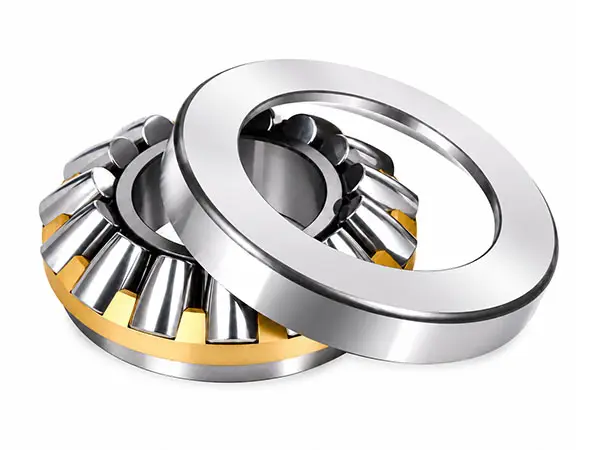
High-speed roller bearing performance is a balance of three forces that never fully separate: heat, dynamics, and lubrication. The catalog number is a starting point, not an answer. Real speed capability depends on how effectively the design moves heat out of the contacts, how well the cage controls the rollers, and how precisely lubricant reaches the load zone.
Specifiers who treat these as design variables rather than fixed constraints gain real performance. That means selecting cage and clearance deliberately, choosing a lubrication method that matches the duty cycle, and confirming thermal behavior before commissioning rather than after a failure. For applications sitting near or beyond standard ratings, working directly with a bearing specialist shortens the path from a questionable arrangement to a validated one. CHG Bearing supports this process by reviewing operating conditions and recommending roller bearing configurations engineered for the speed, load, and thermal profile of the actual machine.