Shaft alignment is an ideal that drawings promise and real machines rarely deliver. Deflection under load, housing bore runout, thermal growth, and fabrication tolerances all push a rotating shaft away from true center. When a bearing cannot absorb that movement, edge loading appears, lubricant film breaks down, and service life collapses. Spherical roller bearings exist precisely for this condition. Their self-aligning geometry lets the inner ring tilt relative to the outer ring while the bearing continues to carry heavy radial and axial loads. This article explains how that compensation works, how to select the right unit, and how to keep it running in demanding applications.
Why Misalignment Happens in Real Machines
Perfect coaxiality between two bearing seats is difficult to hold across a full assembly. Several forces work against it at the same time.
- Elastic deflection: Shafts bend under load. A long shaft between two supports will sag, changing the contact angle at each bearing.
- Manufacturing tolerances: Housing bores, pedestals, and machined shoulders carry permissible deviation. Stacked tolerances across a frame can add up to visible misalignment.
- Thermal growth: A shaft running hot expands differently from its housing, shifting the centerline as the machine reaches operating temperature.
- Installation and foundation issues: Soft foot, uneven grouting, or settlement under a heavy frame can tilt an entire bearing housing.
When a rigid bearing is forced to run out of alignment, the rolling elements load unevenly across their length. One end of each roller carries far more stress than the other. The result is a stress concentration along the raceway edge, elevated friction, and a fatigue spall that appears well before the calculated rating life.
How Spherical Roller Bearings Compensate
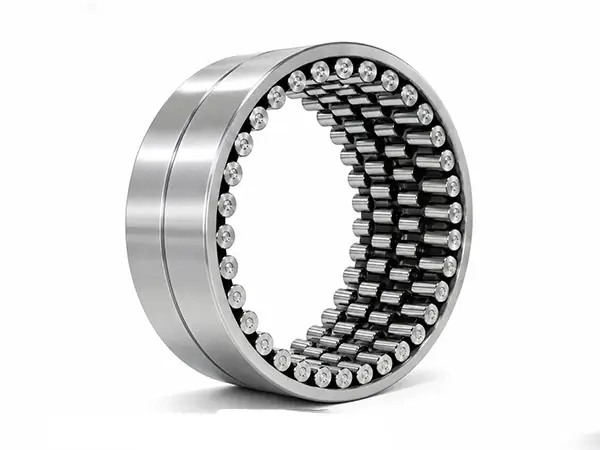
The defining feature of a spherical roller bearing is the match between two curved surfaces. The outer ring carries a spherical raceway, ground on a radius centered on the bearing axis. The inner ring has two raceways set at an angle, and the barrel-shaped rollers sit between them. Because the outer raceway is a true sphere, the inner ring and roller set can pivot inside it without changing the load-carrying contact between rollers and raceways.
Geometry in Plain Terms
Think of the inner assembly as a ball-and-socket joint that still rolls. Tilting the inner ring does not force the rollers to wedge against the raceway, because the outer surface curvature follows the same center point regardless of tilt angle. Load distributes along the full length of each roller rather than concentrating at one edge.
Practical Misalignment Limits
Most spherical roller bearing series tolerate a permissible misalignment angle in the range of roughly 1 to 2.5 degrees, with some designs and operating conditions allowing slightly more. That figure is not a free allowance. The usable limit depends on load magnitude, internal clearance, lubrication type, and whether the bearing also carries axial load. A bearing running near its limiting speed with a thin lubricant film will accept less misalignment than a heavily preloaded unit running slowly. Treat the published angle as a ceiling, not a target, and keep continuous angular error as small as the application permits.
Comparing Bearing Types for Misaligned Applications
Self-aligning capability is not exclusive to one bearing family, but the trade-offs differ sharply. The comparison below reflects how each type behaves when alignment cannot be guaranteed.
- Spherical roller bearings: High radial capacity, moderate axial capacity in both directions, and true self-aligning geometry. Best choice for heavy loads combined with imperfect alignment.
- Self-aligning ball bearings: Good alignment compensation and low friction, but limited load capacity. Suited to light-duty shafts, not shock-loaded equipment.
- Cylindrical roller bearings: Excellent radial capacity but essentially no misalignment tolerance. Edge loading appears quickly.
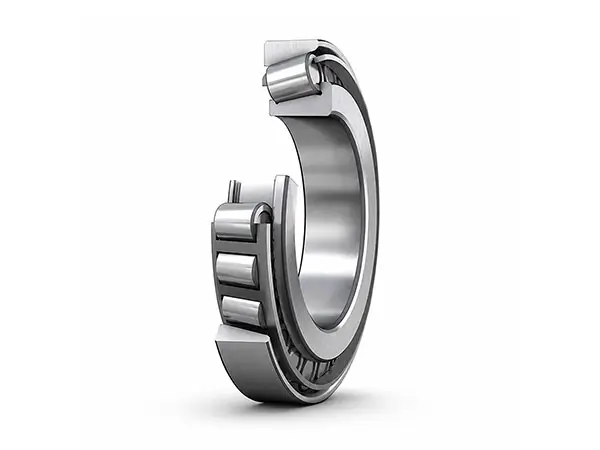
- Tapered roller bearings: Strong combined load capability, but alignment must be set precisely during mounting. Misalignment accelerates wear on the cone and cup.
- Deep groove ball bearings: Small angular compensation only, and insufficient for the load levels typical of misaligned industrial shafts.
For applications that combine shock loading, contamination, and structural deflection, the spherical roller bearing is usually the only option that holds up without an expensive realignment program.
Selection Factors That Decide Service Life
Load Direction and Magnitude
Establish the radial load, the axial load, and whether the axial component reverses. Spherical roller bearings handle axial load in both directions, but the ratio of axial to radial load influences roller guidance and heat generation. Calculate equivalent dynamic load rather than sizing on radial load alone.
Internal Clearance
Misalignment and thermal expansion both consume clearance. A bearing mounted with too little internal clearance will run hot and may lose its self-aligning advantage as the rollers bind. Match clearance class to fit, temperature differential, and shaft deflection.
Cage and Roller Guidance
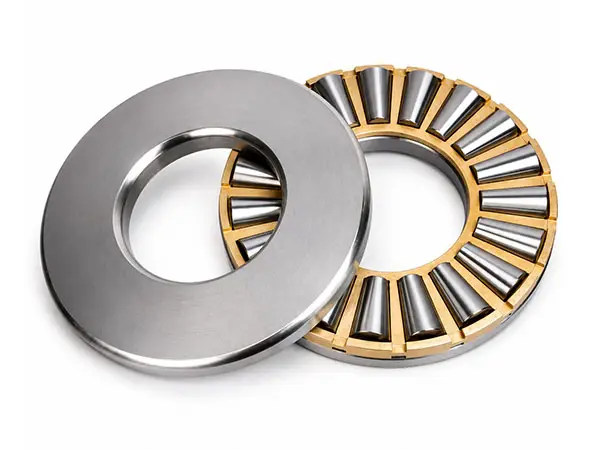
Pressed steel cages suit general duty. Machined brass or bronze cages resist shock, vibration, and elevated temperature. For high-speed or high-acceleration duty, consider a design with improved roller guidance to keep the rollers square during the tilting motion.
Lubrication and Sealing
The self-aligning motion produces a small amount of sliding at the spherical interface. That surface needs adequate lubricant. Grease suits moderate speeds and simpler maintenance schedules; circulating oil serves high-speed or high-temperature duty. Sealed variants keep contamination out of the raceway, which matters in mining, aggregate, and steel processing environments.
Mounting and Maintenance Practices
Self-aligning capability does not remove the need for care during installation. Keep these points in mind.
- Verify housing bore roundness and shaft seat tolerance before mounting. A distorted housing can pinch the outer ring and restrict the aligning motion.
- Heat bearings for interference fits using an induction heater or oil bath at controlled temperature. Never strike a bearing directly with a hammer.
- Allow axial float where the application requires it. A spherical roller bearing on an adapter sleeve can be positioned to permit thermal expansion along the shaft.
- Recheck alignment after the machine reaches operating temperature. Cold alignment readings can shift once thermal growth takes effect.
- Monitor vibration and temperature trends. A rising temperature at constant load often signals lubricant breakdown or the onset of edge damage.
Frequently Asked Questions
Can spherical roller bearings correct misalignment permanently?
No. They accommodate angular error during operation; they do not realign the shaft. If misalignment continues to grow, the underlying cause still needs attention.
Do they carry axial load while misaligned?
They can, within limits. Combining heavy axial load with maximum misalignment reduces the usable angular range and increases friction, so consult the bearing manufacturer's charts for the specific series.
How does a spherical roller bearing differ from a self-aligning ball bearing?
Both compensate for misalignment, but the spherical roller design carries substantially higher radial loads and tolerates heavier shock. Self-aligning ball bearings serve lighter duty at higher speeds.
Getting the Right Bearing for Your Application
Selecting a spherical roller bearing is a balance between load capacity, clearance, lubrication, and the real alignment conditions the machine will see in service. Oversizing for safety margin can be as harmful as undersizing, because light loads may not generate the film thickness needed to protect the raceways.
CHG Bearing supplies spherical roller bearings across the common series used in heavy industry, including designs with machined brass cages, tapered bores for adapter mounting, and sealed variants for contaminated environments. If you are working through a misalignment problem on an existing machine, share the shaft diameter, load data, and operating speed, and the team can help match a bearing that fits both the load profile and the alignment reality.