
Every compact machine design eventually runs into the same constraint: the shaft diameter and the housing bore are fixed, and the gap between them is measured in millimetres. Gearboxes, power tools, hydraulic pumps, textile spindles and automotive transmissions all share this problem. A conventional ball bearing simply cannot be squeezed into a radial envelope that thin without sacrificing load capacity. Needle roller bearings exist precisely for this situation. Their rollers are long and slender relative to their diameter, so the bearing cross-section stays minimal while the contact area — and therefore the load rating — remains high. Understanding when and how to apply them is the difference between a reliable assembly and a premature failure.
Why Radial Space Is the Deciding Constraint
Bearing selection normally balances load, speed, misalignment tolerance and cost. In tight radial envelopes, however, space comes first, and everything else is adjusted around it. The radial space available equals the housing bore minus the shaft diameter, divided by two for a single bearing position. When that value is small, the designer faces a limited set of options:
- Reduce shaft diameter to fit a deeper bearing section — usually impossible because the shaft must transmit torque.
- Enlarge the housing — often blocked by weight, packaging or a mating component.
- Choose a bearing whose section height is inherently small.
This is the point at which needle roller bearings become the practical answer. Their defining characteristic is not the needle shape itself but the ratio of roller length to roller diameter, typically between 3:1 and 10:1. That ratio allows a high load-carrying contact area with a very thin overall ring section.
What Makes Needle Roller Bearings Suitable for Thin Envelopes
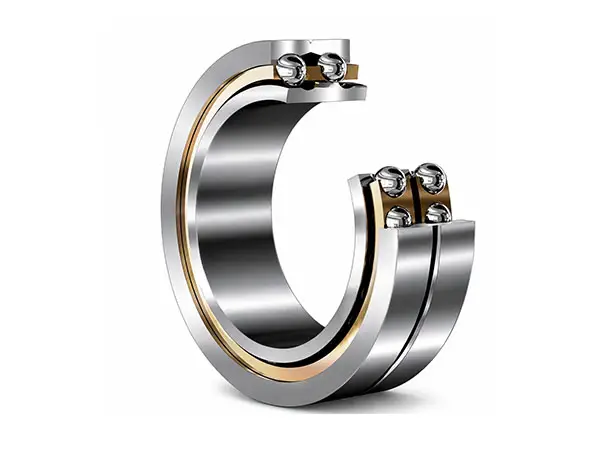
Minimal cross-section for a given load
Because the rollers are supported along most of their length, load is distributed over a long line contact rather than a point contact. Within the same radial envelope, a needle roller bearing generally supports a significantly higher radial load than a ball bearing of comparable outside diameter. For designers working with a hard limit on housing size, this translates directly into either a smaller package or a larger safety margin.
The shaft can serve as the inner raceway
Drawn cup needle roller bearings and needle roller and cage assemblies eliminate the inner ring entirely. The rollers run directly on the shaft surface, which is hardened and ground to act as the raceway. Removing one ring removes several tenths of a millimetre from the section height — often the exact margin a tight design needs. This configuration also reduces part count and cost, provided the shaft hardness, surface finish and roundness meet the bearing manufacturer's specification.
High stiffness in a compact footprint
Line contact produces a stiffer support than point contact at equivalent load, which matters in applications where deflection affects gear mesh, sealing or positioning accuracy. Needle roller bearings are therefore common in planetary gear sets, rocker arm pivots, cam followers and similar mechanisms where rigidity and compactness must coexist.
Comparing Compact Bearing Options
Needle roller bearings are not automatically the right choice. The following comparison clarifies when they win and when another solution is preferable.
- Needle roller bearings: best radial load capacity per unit of radial height; limited tolerance for misalignment; generally not designed for axial loads unless combined with a thrust washer or separate thrust bearing.
- Deep groove ball bearings: handle combined radial and axial loads and tolerate higher speeds; require a thicker section for the same radial capacity.
- Thin-section ball bearings: very small section height, but low load rating and higher sensitivity to housing stiffness.
- Plain bushings: the thinnest option and cheapest, but limited speed, higher friction and no rolling-element fatigue life.
In short: if radial space is scarce and radial load is heavy, needle rollers are usually the strongest candidate. If axial loading or misalignment dominates, reconsider.
Selection Criteria That Matter Most
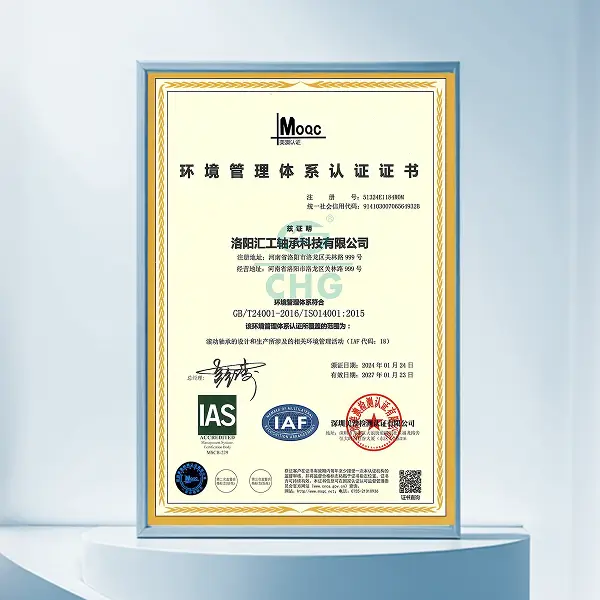
Radial height and envelope measurement
Measure the actual available section height rather than the nominal bore difference. Chamfers, retaining rings, shoulders and housing tolerances all consume space. Where the envelope is extremely tight, a drawn cup outer ring or a cage assembly without an inner ring is often the only workable format.
Load type and magnitude
Confirm whether the load is purely radial, purely axial, or combined. Needle roller bearings are radial-load specialists. Combined loads require an additional element — a thrust washer, a separate ball bearing, or a combined needle/angular contact arrangement.
Speed and lubrication
Needle roller bearings generally operate at lower speed limits than ball bearings of equivalent size. Adequate lubrication is essential because the contact is line-based and heat generation is concentrated. Grease-for-life designs suit moderate speeds; oil circulation or forced lubrication is preferred for continuous high-speed duty.
Shaft hardness and surface finish
When the shaft acts as the raceway, its hardness and finish become part of the bearing specification. A shaft that is too soft will brinell and fail quickly; one that is too rough will destroy the lubricant film. Always match shaft preparation to the bearing catalogue requirement.
Misalignment tolerance
Needle rollers are unforgiving of shaft deflection and housing misalignment. Where alignment cannot be guaranteed, a self-aligning or spherical-seat arrangement should be considered instead.
Installation Practices That Protect Service Life
- Verify housing bore roundness and shaft concentricity before assembly; a distorted outer ring will load only part of the roller set.
- Press or heat-fit with tooling that applies force to the ring being fitted, never through the rollers.
- Keep the bearing and housing clean during installation — needle bearings are more sensitive to particulate contamination than larger-section bearings because the lubricant film is thin.
- Confirm end-float and axial location with retaining rings, shoulders or thrust washers as specified.
- Re-lubricate or verify grease quantity after assembly, particularly in sealed drawn cup designs.
Sourcing Considerations for Compact Bearing Designs
Needle roller bearings are dimensionally sensitive components. Small deviations in roller diameter, cage concentricity or outer ring wall thickness have a disproportionate effect on performance because the section is already minimal. Buyers should therefore look beyond the catalogue number and evaluate the supplier's process control, material traceability and dimensional consistency across batches.
CHG Bearing supplies needle roller bearings and related compact bearing solutions for machinery builders who work within narrow radial envelopes. For design engineers, the practical value of a consistent source is fewer assembly surprises: parts that fit the first time, meet the specified load rating, and behave the same way in the tenth production run as in the first prototype. Where an application sits at the edge of the standard range, discussing the envelope, load and speed conditions with the bearing supplier early in the design cycle usually produces a better outcome than adapting a stock part afterwards.
Frequently Asked Questions
Can needle roller bearings carry axial loads?
Generally no, not by themselves. They are radial load elements. Axial location must be provided by thrust washers, a separate thrust bearing, or a combined bearing arrangement.
Do I always need a hardened shaft?
If the bearing has no inner ring, yes — the shaft becomes the inner raceway and must meet the required hardness and surface finish. If the bearing includes an inner ring, the shaft only needs adequate fit and support.
Are needle roller bearings suitable for high speeds?
They tolerate moderate speeds well but have lower speed limits than ball bearings of comparable size. Lubrication method, cage design and radial clearance all influence the achievable limit, so always check the specific bearing's rating.
How much radial space can they save?
The saving depends on the format chosen. A needle roller and cage assembly running directly on the shaft removes the inner ring entirely and represents the thinnest practical rolling bearing solution for a given shaft diameter.
Conclusion
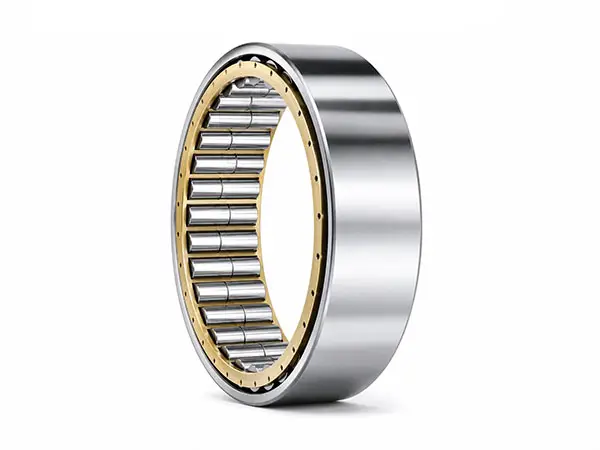
Tight radial space is a design constraint that rarely negotiates. Needle roller bearings address it by combining a very small section height with line contact that preserves load capacity. The key is to apply them within their limits: radial loads, adequate lubrication, controlled alignment, and a suitably prepared shaft or a bearing with a proper inner ring. Get those fundamentals right, and a component that measures only a few millimetres in section height can carry the loads and deliver the service life that a much larger bearing would otherwise require.