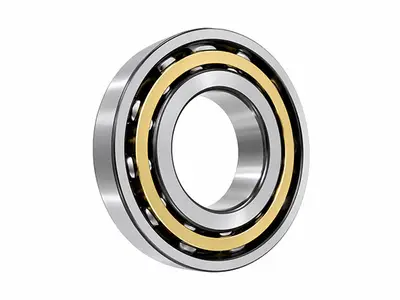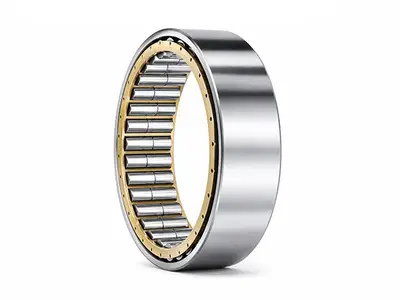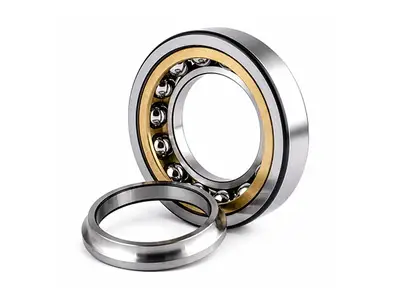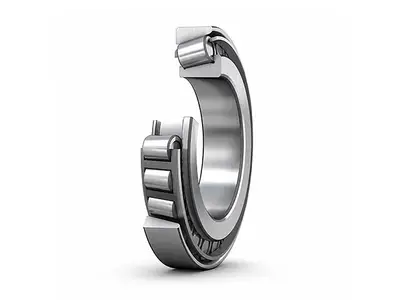
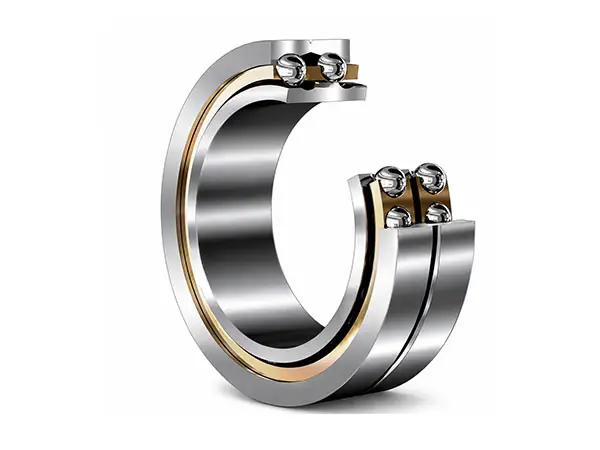
Double Row Angular Contact Ball Bearings
Rigid Bidirectional Locating Bearings for Combined Loads and MomentsBearing Type: Double Row Angular Contact Ball Bearing
Bore Diameter: 100-340 mm
Contact Angle: Usually 40 degrees
Primary Load: Radial-dominant combined radial and axial load
Axial Load: Bidirectional
Moment Load: Capable of carrying tilting moments.
Technical Specifications
| Specification | Details |
|---|---|
| Bearing Type | Double Row Angular Contact Ball Bearing |
| Bore Diameter | 100-340 mm |
| Contact Angle | Usually 40 degrees |
| Primary Load | Radial-dominant combined radial and axial load |
| Axial Load | Bidirectional |
| Moment Load | Capable of carrying tilting moments |
| Locating Function | Bidirectional axial location |
| Separability | Non-separable |
| Material | Chrome steel or stainless steel |
| Lubrication | Grease or oil |
| Sealing | Sealed or open |
Double Row Angular Contact Ball Bearings Overview
The basic design of a double row angular contact ball bearing is similar to two single row angular contact ball bearings arranged back-to-back, but with a smaller axial envelope. The integrated double row construction provides good rigidity and a compact locating solution.
These non-separable bearings carry radial-dominant combined radial and axial loads, axial loads in both directions and tilting moments. They can limit axial displacement of the shaft or housing in both directions and are suitable for locating both ends of a roll. The contact angle is usually 40 degrees.
High Rigidity and Combined-Load Capacity
The two rows of balls act together through opposed contact lines. This arrangement increases system rigidity and enables simultaneous support of radial load, bidirectional axial load and moment load, with performance comparable to a back-to-back pair of single row angular contact bearings.
- Compact double row construction
- High bearing-system rigidity
- Bidirectional axial load capacity
- Tilting moment capacity
Bidirectional Location and Alignment Control
The bearing can locate a shaft or housing axially in both directions. Its permissible angular misalignment is limited and depends on internal clearance, bearing size, internal design and the forces and moments acting on the bearing. Excessive inclination reduces running accuracy, increases noise and can cause premature failure.
- Locates in both axial directions
- Usually 40-degree contact angle
- Strict shaft and housing alignment required
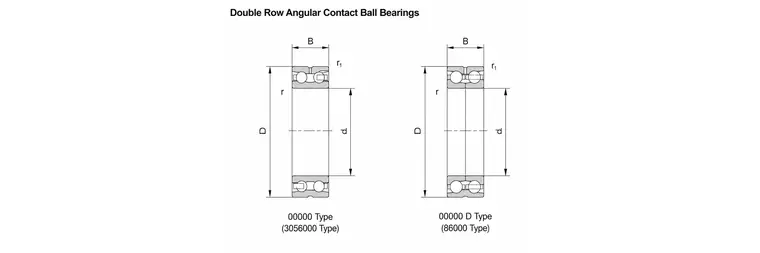
Structural Types and Principal Dimensions
| Type | Series | Structure |
|---|---|---|
| 00000 Type | 3056000 Type | Integrated double row angular contact design |
| 00000 D Type | 86000 Type | D-type double row angular contact design |
Mounting and Operating Considerations
Because angular misalignment capacity is limited, shaft and housing seats should be accurately machined and aligned. The selected clearance, fit, lubrication and sealing arrangement should match bearing size and loading. Avoid excessive deflection or housing-seat error that would disturb the intended contact pattern.
Typical contact angle: 40 degrees
Typical Applications and Arrangements
- Roll-end locating positions
- Radial-axial combined-load supports
- Bidirectional axial locating arrangements
- Moment-load bearing positions
- Compact high-rigidity supports
- Back-to-back pair replacement arrangements